 ALL PROJECTS
Industry & energy
IRIS
1GW superconducting cable for the transport of energy without losses
Genoa Milan Salerno - Funded by PNRR
The National Institute of Nuclear Physics (INFN) and ASG Superconductors are pooling the expertise and skills of those working at the frontier of scientific and technological research and those involved in industrial development and the production of advanced technologies, to develop the highest-performance superconducting cable ever made in Europe.
IRIS (Innovative Research Infrastructure on applied Superconductivity) is a project financed with funds from the National Recovery and Resilience Plan-NextGenerationEU allocated for research infrastructures by Mission 4 of the Ministry of Universities and Research (MUR). ASG Superconductors was awarded the main tender for the IRIS project by the INFN, which is the promoter and project leader.
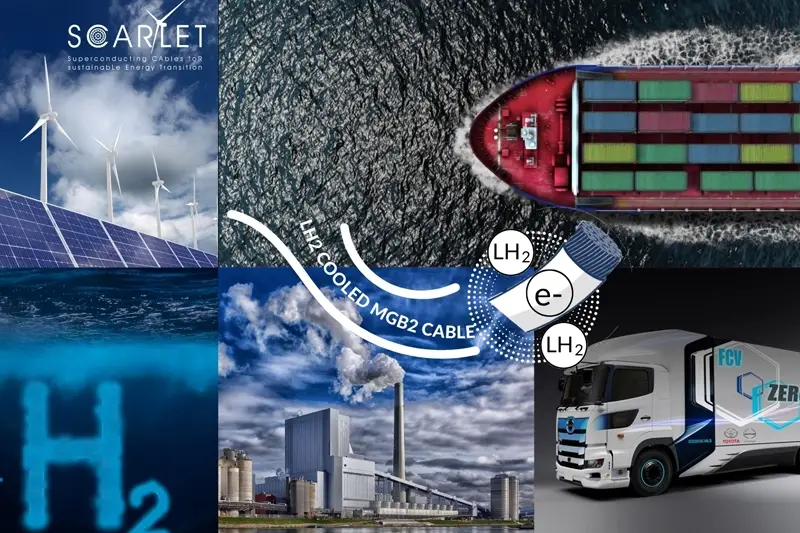
The aim of IRIS is the creation of a nationwide infrastructure capable of developing innovative technologies for environmental sustainability. These are superconducting technologies with a higher temperature than conventional ones, and a higher magnetic field. They are used both in fundamental research, to build the magnets of next-generation particle accelerators, and in other fields, such as energy, where they can be used to make high-power cables for sustainable transport, without dissipating energy in the form of heat.
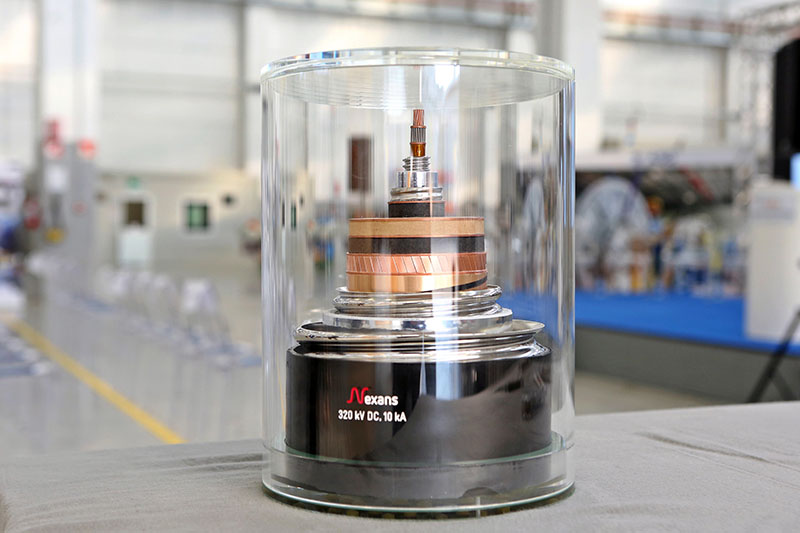
To achieve this goal, IRIS will build a prototype of a cable made of an innovative high-temperature superconducting material, magnesium di-boride (MgB₂), and an infrastructure to validate this and other technological solutions, introducing standards like ISO, IEEE, IEC, etc.
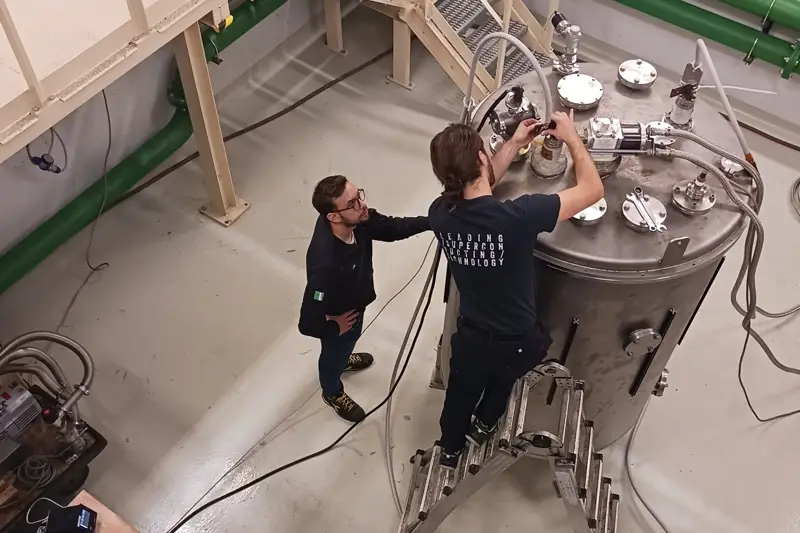
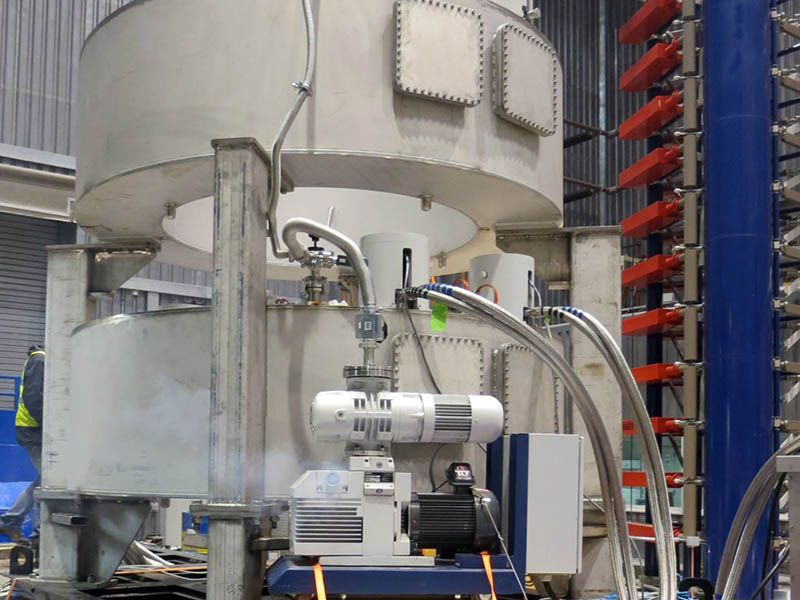
ASG Superconductors will play a strategic role for IRIS, because it will be responsible for the design, production and qualification of the prototype cable, which will be 130 metres long and will be tested at the Test Facility for Large Magnets and Superconducting Lines in Salerno.
Using cables based on the technology being developed by the IRIS project to transport electricity could reduce losses due to dissipation and dispersion by a factor of five compared to conventional lines. To give you an idea: assuming the use of a 1,000 km superconducting line transporting 3 GW of power the equivalent of 150,000 tonnes of CO2 per year would be saved. And electromagnetic emissions and ground heating could also be reduced to zero, minimising the space needed to lay overhead lines or conventional cables, with great benefit for the environment and a significant reduction in construction and operating costs.
IRIS is an INFN-led project in collaboration with the CNR-SPIN, the “Statale University” of Milan, the University of Genoa, the Federico II University of Naples, the University of Salento and the University of Salerno.

.jpg)